Foods that last decades
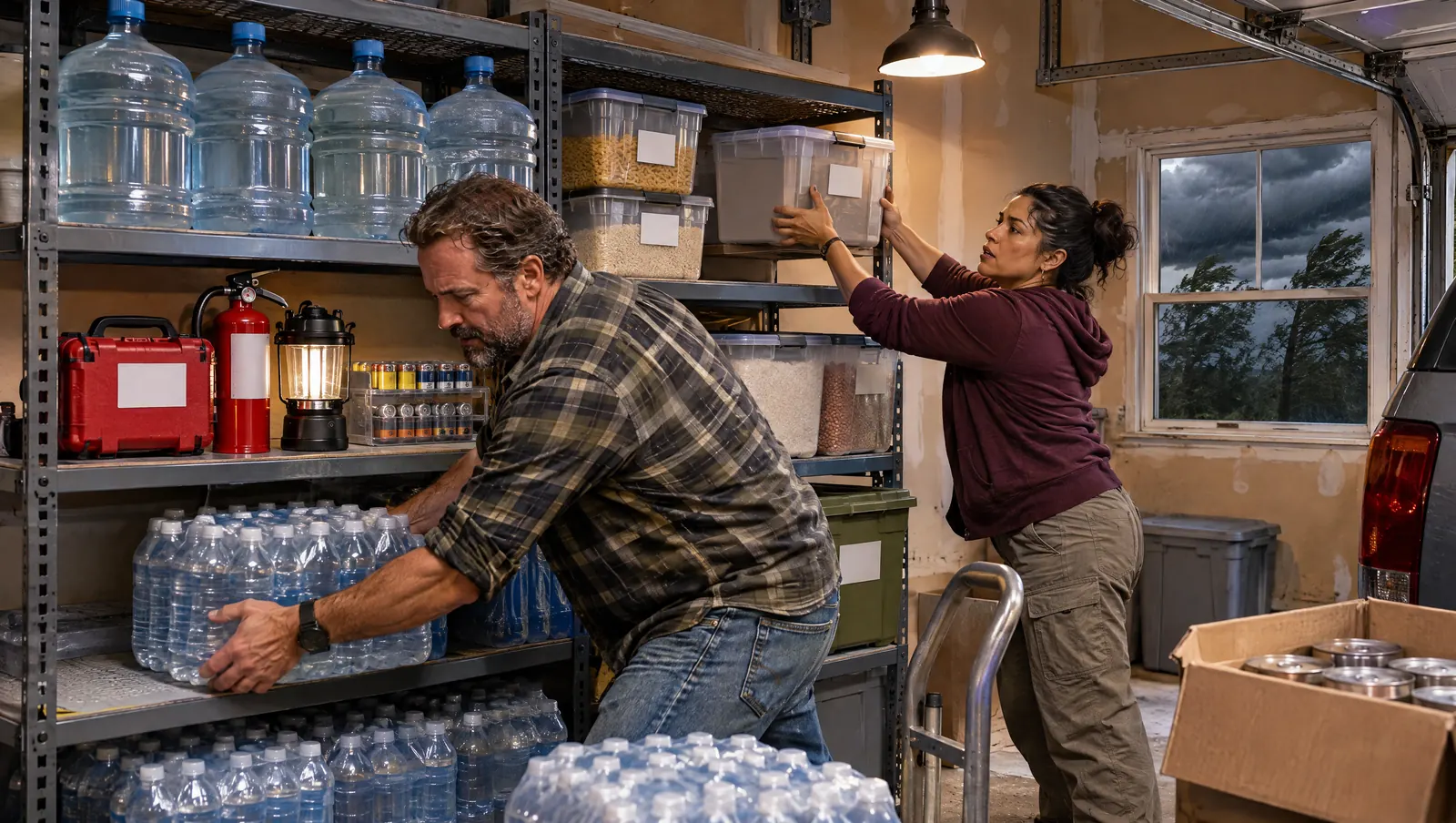
Ten dry staples that can keep for years, how long each one lasts, and how to pack them in Mylar bags and buckets. Shelf lives come from Utah State University Extension and BYU research.
Ready to buy bags, buckets or ready-made meals? Food storage: what to buy
⚠ Seal only dry food without oxygen
Oxygen absorbers are for dry food only, about 10% moisture or less. Moist food sealed without oxygen can cause botulism poisoning.[8]
A few plain foods keep for decades if you pack them right: dry, sealed away from oxygen, and kept cool. BYU research found wheat and white rice still very acceptable after more than 30 years of storage, and beans, pasta, potato flakes and oats keeping up to 30 years.[1] They won't taste brand new, but they will feed you.
Most of them need water and heat to cook, so store water too. The supply calculator's water section shows how much your household needs.
The rule that matters most
Dry, no oxygen, cool. Every 10.8°F warmer cuts shelf life in half, so a steady 40 to 60°F is best. Keep stored food out of hot garages and attics.[8] The long shelf lives below assume the food is sealed without oxygen and kept cool.[1][2]
How long each food lasts
| Food | Sealed shelf life | How to store it |
|---|---|---|
| White rice | Up to 30 years in cool storage; about 10 years at a steady 70°F[2] | Mylar-type bags or #10 cans with oxygen absorbers.[2] |
| Wheat berries (whole wheat kernels) | 30 years or more[1]. Wheat stored 32 years in cans still made bread most tasters accepted.[3] | Mylar-type bags or #10 cans with oxygen absorbers. You need a grain mill to make flour; you can also cook or crack the kernels.[3] |
| Dried beans | Up to 30 years[1] | Sealed without oxygen. Older beans need longer soaking and cooking.[7] |
| Rolled oats | Up to 30 years[1] | Sealed without oxygen. Rolled oats are heat-treated during processing, which helps them keep.[11] |
| Dry pasta | Up to 30 years[1] | Sealed without oxygen. |
| Potato flakes | Up to 30 years[1] | Sealed without oxygen. |
| Honey | No limit for safety. Best quality for about 2 years; it may crystallize and is still safe.[4] | Filtered liquid honey keeps best. Use glass jars or lined cans, because honey rusts bare metal. No oxygen absorber.[4] |
| Salt | No limit if kept dry and clean (iodized salt).[5] | Keep it in its own container inside a Mylar-type bag or a jar. Moisture makes it cake.[5] |
| White sugar | No limit for safety. Best quality for about 2 years, because it can lump and harden.[4] | Keep it dry; damp sugar turns hard and lumpy. No oxygen absorber.[4] |
| Spirits (vodka, whiskey and other liquor) | We found no shelf-life figure from Utah State or BYU, so we don't give one. | Keep bottles sealed. See the note on alcohol below. |
Five things to know before you store
- No oxygen absorbers with sugar or honey. Utah State says removing oxygen for sugar and honey is not required and not recommended.[4] Salt doesn't need one either: dry iodized salt keeps indefinitely.[5]
- Old beans cook slower. Beans that have been stored a long time need longer soaking and cooking, so plan extra water and fuel.[7]
- Liquor under 60% alcohol isn't an antiseptic. The CDC's minimum for hand sanitizer is 60% alcohol.[9] Check the percentage on the label before counting on a bottle to clean hands.
- White rice, not brown. The bran on brown rice holds a little oil that goes rancid. Utah State gives brown rice up to 6 months at room temperature.[6]
- Most of these foods need water to cook. Rice, wheat, beans, oats, pasta and potato flakes all need water. Count it in your water supply.
How to pack it
- Fill a 1-gallon Mylar bag with one dry food.
- Drop in an oxygen absorber sized for the bag (the bag maker lists the size). Skip it for sugar, honey and salt.
- Seal the bag closed with heat, leaving no gaps.
- Label it with the food and the date.[10]
- Store the bags inside a food-grade bucket with a Gamma screw-on lid. Rodents can chew through bags,[3] and the screw lid makes it easy to open and close.
Checklist
Mistakes to avoid
- Storing brown rice for the long term
- Adding oxygen absorbers to sugar or honey
- Sealing food that isn't fully dry
- Keeping buckets in a hot garage or attic
- Leaving bags loose where rodents can reach them
- Forgetting the water and fuel you need to cook it
Do this this weekend
Pack one bucket: three or four 1-gallon bags of white rice or beans, each with an oxygen absorber, sealed, labeled with today's date, and set inside a food-grade bucket with a Gamma lid. Put it in the coolest dry spot in your home.
Shopping for it
Bags, absorbers, buckets, ready-made meals and grain mills, with the reviews we used: Food storage: what to buy.
Gear for packing
As an Amazon Associate I earn from qualifying purchases.
Wallaby 7.5 mil 1-Gallon Mylar Bags with Oxygen Absorbers (30 pack)
Wallaby
Seal rice, beans and oats for years of storage; absorbers included.
Reviewed by TruePrepper: Best overall (measured thickness and seams) (opens in a new tab)
Check price on Amazon (opens Amazon in a new tab)Gamma2 Gamma Seal Lid (black, fits 3.5-7 gal buckets)
Gamma2
Airtight screw-on lid that turns a bucket into easy-open pantry storage.
Reviewed by Modern Survival Blog recommendation (opens in a new tab)
Check price on Amazon (opens Amazon in a new tab)Food-Grade 5-Gallon Bucket
(confirm brand on listing)
Food-safe buckets for mylar-packed staples.
Reviewed by Modern Survival Blog recommendation (opens in a new tab)
Check price on Amazon (opens Amazon in a new tab)Sources
- Ask an Expert: New Tips for Old Food (Oscar A. Pike, BYU Nutrition, Dietetics and Food Science), Y Magazine, Spring 2008 Brigham Young University
- Storing White Rice Utah State University Extension
- Storing Wheat Utah State University Extension
- Storing Sugars Utah State University Extension
- Cooking Food Storage (salt, baking powder, baking soda, yeast) Utah State University Extension
- Food Storage for Emergencies (booklet, brown rice section) Utah State University Extension
- Dry Beans (fact sheet FN 207) Utah State University Extension
- 7 Factors That Prolong Your Food Storage Supply Utah State University Extension
- About Hand Sanitizer Centers for Disease Control and Prevention
- Food Storage and Packaging Utah State University Extension
- Food Storage in the Home Utah State University Extension
Related guides
Build a Backup Pantry in Three Tiers
Build a backup pantry in layers: extras of what you already eat, then bulk staples, then fats, vegetables, proteins, and seasonings, sized with simple calorie math.
Water, medicine and safetyEmergency Water: How Much to Store, How to Keep It, How to Make It Safe
Store at least a gallon per person per day, keep it clean and dated, and know how to boil, disinfect, or filter water if your supply runs out.
SupplyBuild Your Own Food Storage or Buy a Kit?
An honest side-by-side of building your own food storage and buying pre-packed long-term kits, plus the one calculation that tells you the real cost per day.
ReservePreparing on a Budget, Without Debt
Get ready step by step with free planning first, then one or two extra items per grocery trip, and never with borrowed money.